
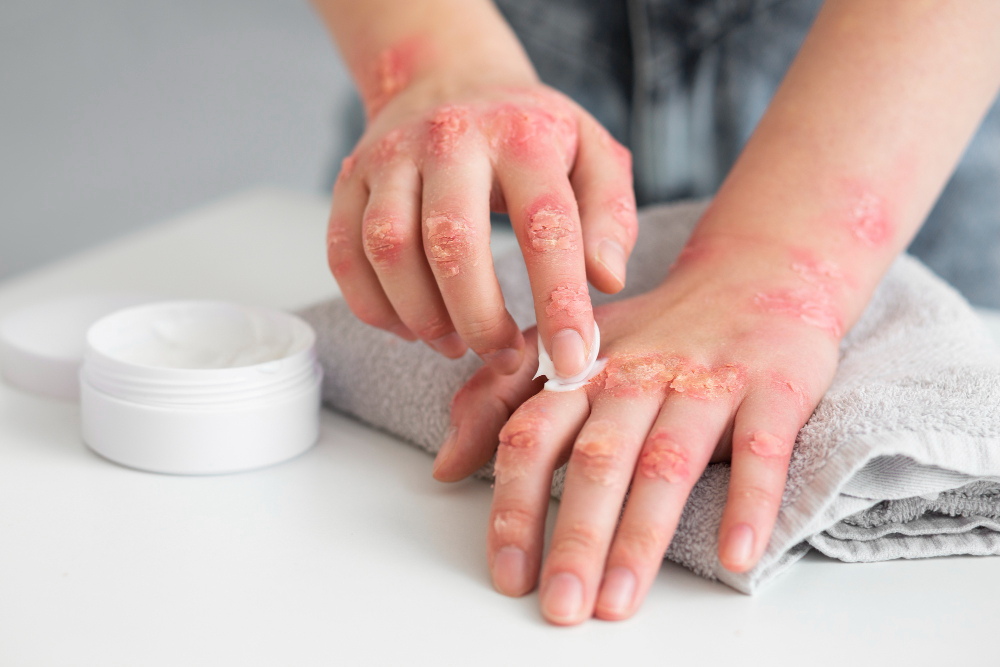
What Is Contact Dermatitis?
Contact dermatitis is a common skin problem. It happens when your skin touches something that causes irritation or an allergic reaction. As a result, you may notice redness, itching, or swelling. Many people get contact dermatitis from everyday products. For example, soaps, lotions, or cleaning supplies can trigger skin irritation from products. According to the CDC, contact dermatitis is one of the most frequent skin issues seen by doctors. While it is not life-threatening, it can be uncomfortable and affect daily life.
Common Symptoms and Signs
Usually, contact dermatitis shows up soon after your skin touches the trigger. However, sometimes symptoms may appear hours later. The signs can vary, but most people notice:
Sometimes, the skin may feel sore or tender. In some cases, scratching can make the irritation worse. Therefore, it is important to avoid scratching if possible.
Typical Causes and Everyday Product Triggers
There are two main types of contact dermatitis. First, irritant contact dermatitis happens when a product damages the skin’s surface. Second, allergic contact dermatitis occurs when your immune system reacts to a substance. Both types can be caused by items you use every day. For example, common triggers include:
Even though these items seem harmless, they can cause skin irritation from products in some people. Sometimes, repeated use makes the skin more sensitive over time.
How Contact Dermatitis Is Diagnosed
Doctors usually diagnose contact dermatitis by looking at your skin and asking about your recent activities. For example, they may ask if you started using a new soap or lotion. Sometimes, a doctor may suggest a patch test. In this test, small amounts of different substances are placed on your skin. After a few days, the doctor checks for any reaction. This helps find out which product or ingredient is causing the problem. According to the American Academy of Dermatology, patch testing is a safe way to identify allergies.
Treatment Options: Medical and Home Care
Most cases of contact dermatitis improve with simple care. However, severe cases may need medical treatment. Treatment options include:
In many cases, symptoms go away within a few days to weeks. Still, it is important to avoid scratching, as this can lead to infection.
Lifestyle Tips for Managing and Avoiding Flare-Ups
Even though contact dermatitis can be bothersome, you can take steps to manage it. For example, try the following tips:
Additionally, always read product labels. If you notice a reaction, stop using the product right away.
Prevention Strategies
While it is not always possible to avoid contact dermatitis, you can lower your risk. For instance, you can:
Because everyone’s skin is different, what bothers one person may not affect another. Therefore, paying attention to your skin’s reactions can help you prevent future flare-ups and consult best skin specialist at ASHA SKIN CLINIC.